01 ON THE WAY HOME
“How far?”
Is only the beginning.
There’s more to this story than metres.
The question on the way home
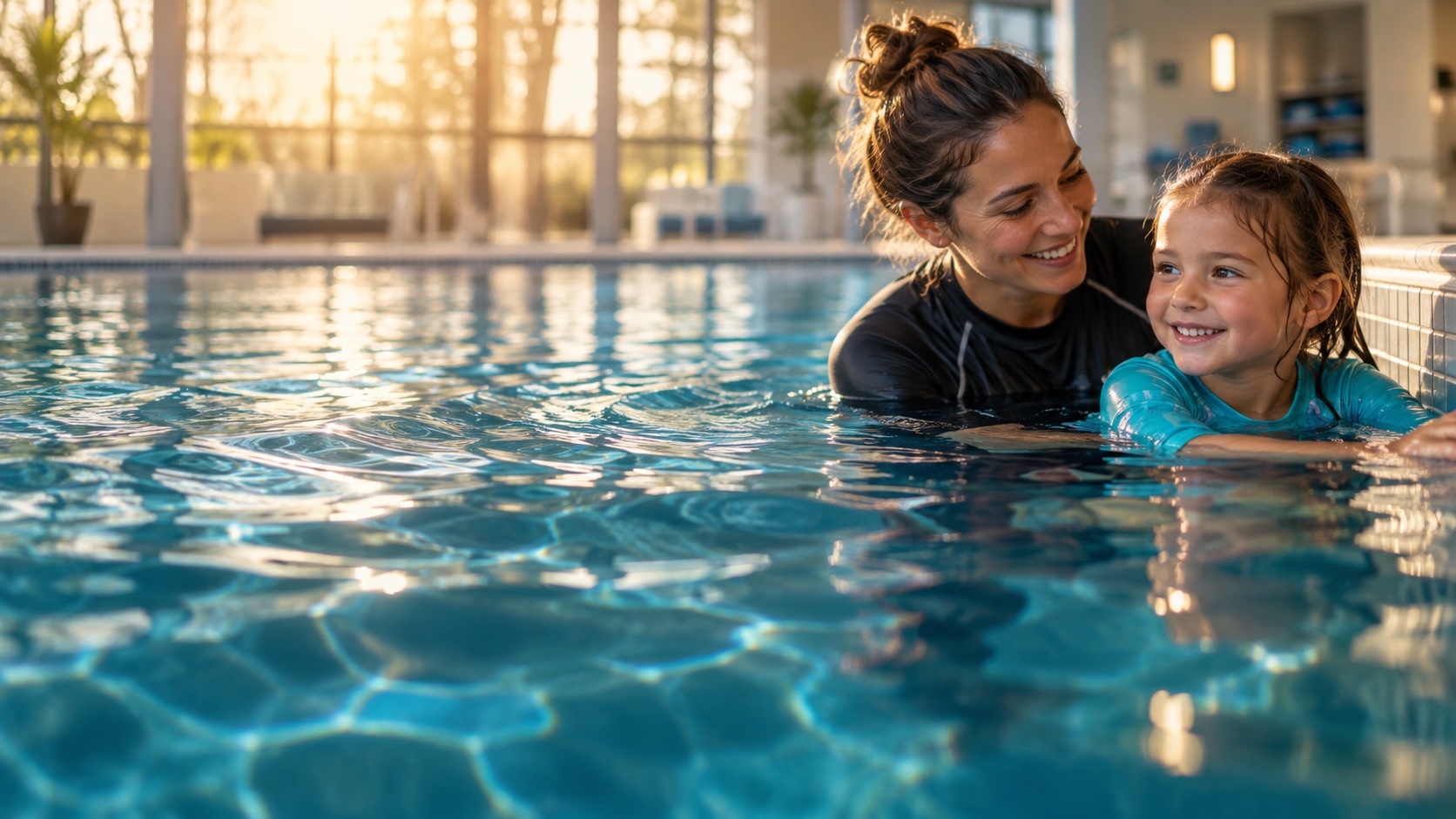
How far did you swim? It is an easy question to ask. Distance gives a lesson something you can picture: one width, one length, then another. But imagine your child has spent the session working on a small detail. Their answer might be the same as last week, even when their experience was different.
Try leaving the numbers for a moment. Ask what they worked on, what surprised them or what they would like to try again. The answer may give you a better starting point for understanding the lesson.
02 BENEATH THE SURFACE
A small detail.
A different feeling.
Two attempts can look alike. Learning can still happen.
Look underneath the length
Scottish Swimming describes core aquatic skills, including breathing and moving in water, as foundations for learning strokes. It also explains that progress varies between children and does not always arrive evenly from week to week.
That helps put a repeated activity into context. From the poolside, two attempts can look similar. The teacher may be watching a specific aspect of the swimmer’s technique or checking how consistently a skill can be repeated.
Rather than guessing, ask what the current focus is. A clear answer gives you a more useful way to follow the next lesson than comparing your child with the swimmer beside them.
03 A BETTER QUESTION
What are
we working on?
Let the teacher show you what to look for.
Let the teacher define the next step
Ask three simple questions: What are we working on now? What will a more secure version of that skill look like? What is a suitable way for us to support it? You do not need to turn the answers into a training schedule.
Stepping Stones has a Stage Finder to help families identify a starting point. Use that as an entry to the conversation, then speak to the team about your child’s current lessons and progression. An online tool cannot see what their teacher sees in the water.
If your venue does not offer spectating, those conversations become especially useful. Arrange them through the team’s usual contact route rather than trying to interrupt teaching or guess from the few moments you see at collection.
04 THEIR OWN WORDS
A memory.
Not a scorecard.
Let their own words shape the story.
Keep a record that leaves room to grow
You could keep a tiny note after each lesson: one thing your child mentions and one question for next time. It might be that they understood an instruction, enjoyed an activity or wanted help with something. Let their own words shape the note.
This is a family memory, not a scorecard. There is no need to rank every visit or create a new target at home. If something continues to worry your child, share it with the teacher so the next conversation has a clear starting point.
05 THE WHOLE SWIMMER
The little wins
between the lengths.
Ask what felt different today.
Make room for the whole swimmer
A longer swim can be a lovely moment to celebrate. So can understanding something that felt confusing last time. Both belong in the story, with the teacher guiding what is appropriate for your child’s stage.
Next time you head home from the pool, try asking what felt different today. You may hear about a distance. You may hear about a detail. Either way, you have opened a conversation that makes room for more than a number.