01 AT THE CHANGING ROOM
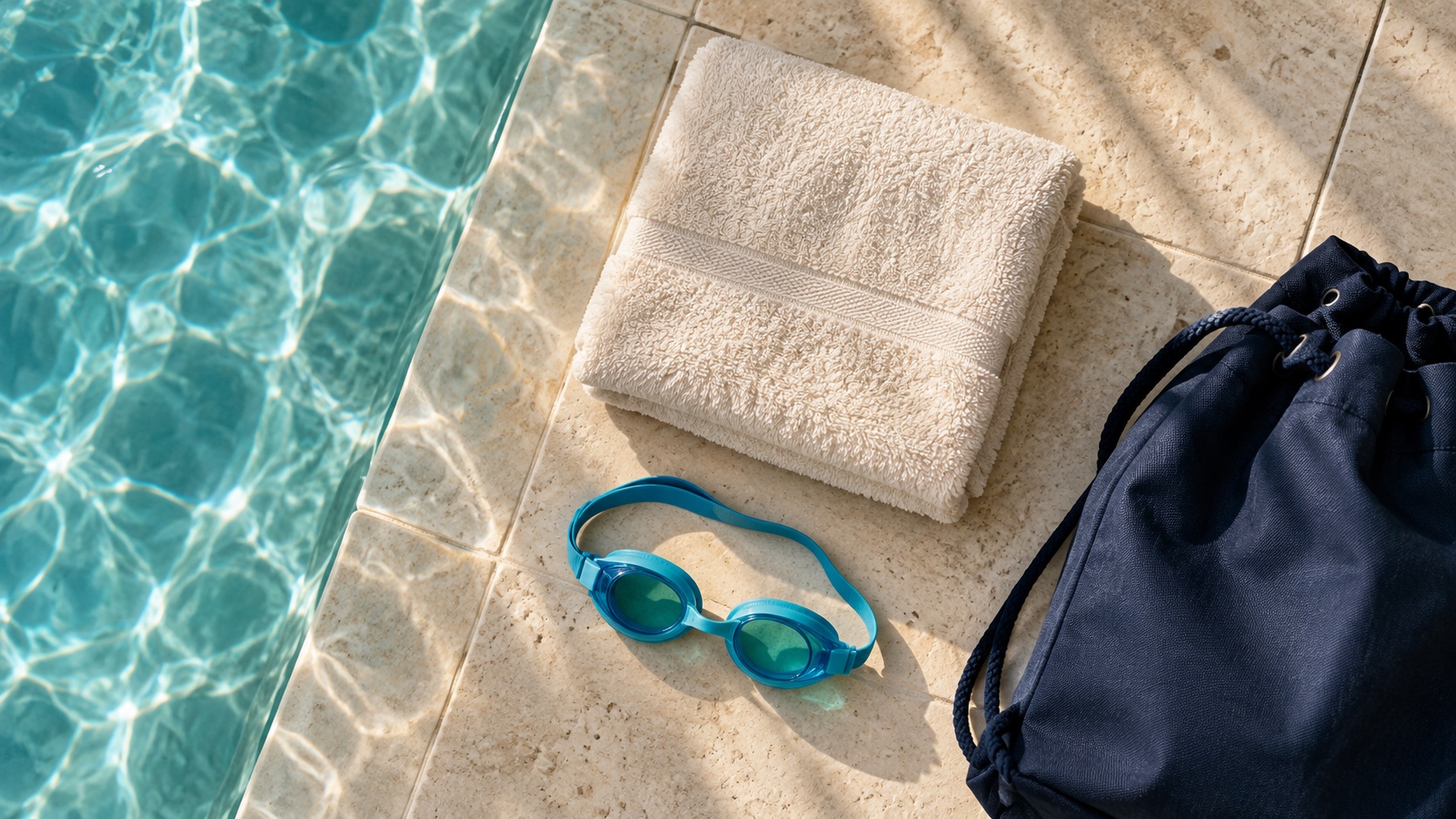
The towel is ready.
They’re not sure.
A beginning, not a bravery test.
Before the first splash
Picture the moment outside the changing room. The towel is ready. The goggles are packed. Your child has talked about swimming all week — and now their hand tightens around yours.
You do not need a perfect pep talk. You need to work out what feels difficult. Is it the water, the new teacher, the noise, or simply not knowing what happens next? A quiet conversation gives you something more useful than another cheerful promise that everything will be fine.
The first lesson is a beginning. It does not have to become a family test of bravery.
02 THE BIG UNKNOWN
Make the unknown
a little smaller.
A familiar sequence. A little less mystery.
Make the next step visible
Before you leave home, talk through a simple sequence: arrive, get changed, meet the team, follow the teacher’s instructions, then get dry and head home. Keep the explanation short enough for your child to picture.
Swim England recommends familiarising children with the pool environment and allowing extra time. Check whether a visit is possible at your venue before promising one. A school pool, a health club and a public leisure centre can have different access arrangements.
For families around Edinburgh, Falkirk, Livingston or another Stepping Stones location, the useful starting point is your own venue information. Knowing which entrance to use can be more helpful than reading another general list of swimming tips.
Check your own venue’s entrance and allow a little extra time.
03 THE FIRST CONVERSATION
One worry.
One conversation.
You don’t have to solve it all before you ask.
Tell the teacher the useful thing
A label such as nervous can mean many things. Try to explain the particular concern: unexpected splashes, separating from you, or wearing goggles. Share any additional support needs with the team before the lesson so you can discuss the arrangements together.
Stepping Stones describes its group programme as small classes with teachers in the water. Ask the team how your child’s starting point will be supported and which lesson option fits. You do not have to solve every worry before making contact.
A new place+
Open your venue guide together. Check the entrance, changing arrangements and handover instructions.
Meeting the teacher+
Tell the team ahead of time what your child is worried about and ask how the first handover works.
Trying something new+
Ask the teacher what the next suitable step is. Keep the conversation about that step, rather than a deadline.
04 THE QUIET BREAKTHROUGH
Look for
the little win.
Small enough to miss. Big enough to matter.
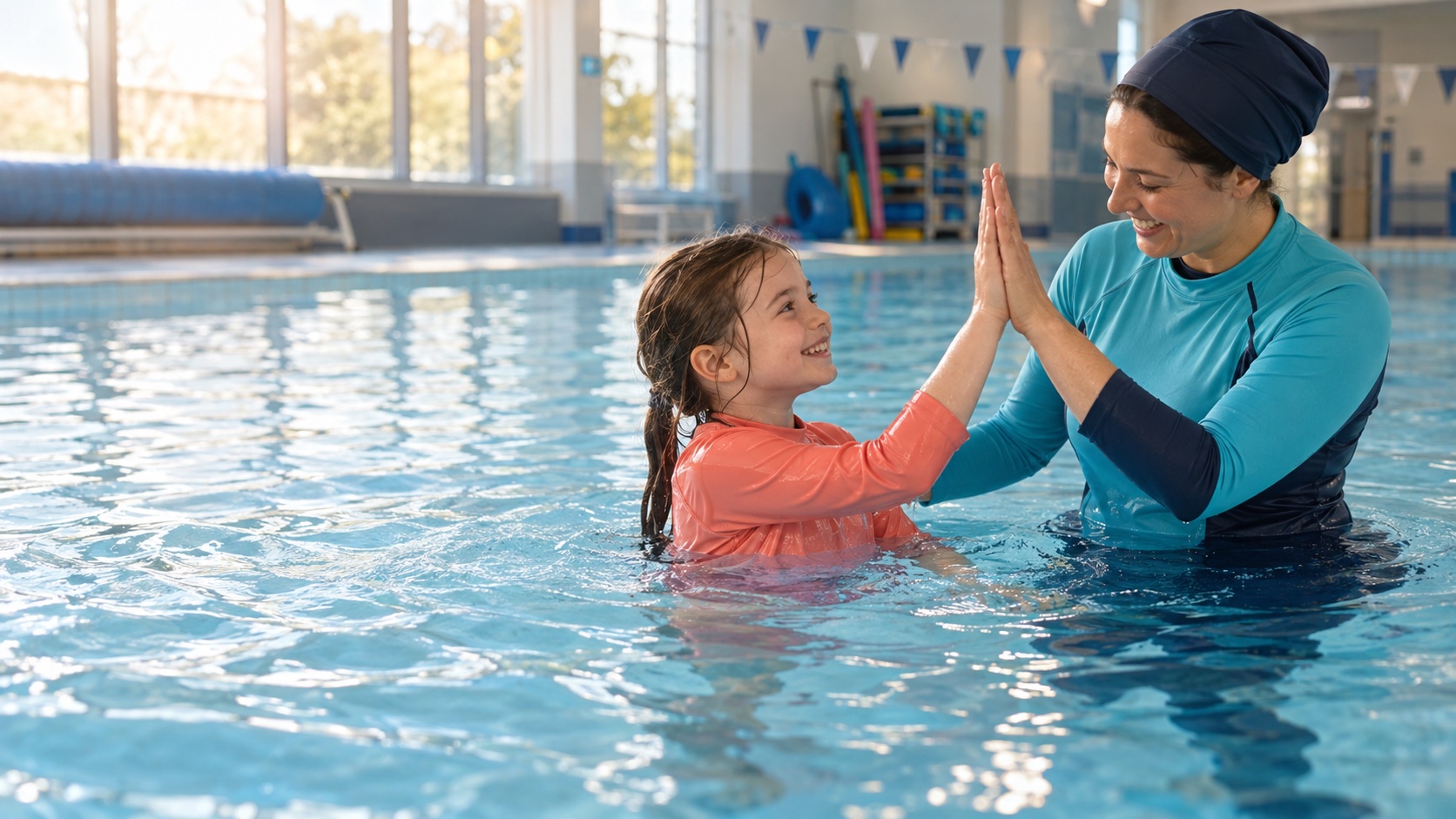
What could a little win look like?+Meeting the teacher. Asking for help. Trying one activity. Notice something your child actually did, in their own time.
Notice something you can name
Afterwards, leave room for your child’s version of the lesson. What felt different from what they expected? What would they like to ask next time? A short answer is enough; the walk back to the car does not need to become an interview.
Look for a specific moment to acknowledge. Perhaps they met someone new, asked for help or joined one activity. These are examples of things you might notice, not milestones every child must achieve on day one.
You can hold the bigger goal of learning to swim while making room for a small beginning. Next week, the familiar towel and packed goggles may come with one useful extra: a clearer idea of what to expect.
05 THE NEXT CHAPTER
Next time,
a little more familiar.
One useful question to carry with you.
One thing to take into the next lesson
Choose one question together and pass it to the team. Keep any practice suited to your child and agreed with their teacher. In and around water, follow the venue’s rules and supervision arrangements. Confidence is something to support; it is never a reason to step back from supervision.